
The 3-Step Hiring System
Every Founder Needs

Let's be honest. You didn't start a company because you love screening resumes.
You're a founder. You're juggling product, fundraising, and the 17 fires that broke out before 10:00 AM. And now, you need to hire. So you do what everyone does: you throw a vague job description online, pray for the best, and get frustrated when your inbox is a mix of C-players and unqualified applicants.
Ad-hoc hiring almost always leads to misaligned talent, culture drift, and months of lost momentum. That’s exactly why high-growth teams partner with Tripod - to build repeatable, strategic hiring systems that consistently attract and convert A-players.
The trap is thinking you need a 20-person HR team or a six-figure retainer with a recruiting agency. You don't.
You need a system—and as the founder, you must design it. Not because you should be sourcing candidates yourself, but because great teams are built intentionally. A-players don’t join “a job.” They commit to a mission and the leader behind it. As CEO, your role is to set the vision, sell the opportunity, and be present in the hiring process. You remain the chief storyteller, culture-keeper, and final decision-maker—while the right systems and support handle the sourcing.
Stop treating hiring as a reactive chore. Start treating it as the proactive, system-driven engine for your growth. Here is the exact 3-step founder-led hiring system I've used to build and scale multiple high-performing teams.
Step one: Define the Mission, Not the "Role"
The single biggest mistake founders make is hiring for a list of skills.
They write job descriptions that look like a laundry list: "5+ years of React," "Expert in SEO," "Proficient in HubSpot." This approach gets you applicants who are good at doing things. It doesn't get you people who are good at achieving outcomes.
Stop hiring for a resume. Start hiring for a mission.
Before you write a single word of a job ad, you must create a "Mission Brief" Scorecard. It's a simple, one-page internal document that defines success.
The "Mission Brief" Scorecard
Your scorecard must answer three questions:
1. The Mission (6–9 Months)
Design, build, and launch a high-performing, end-to-end customer onboarding experience that reduces user drop-off by 40% and establishes a scalable technical foundation for future self-serve growth.
This mission is engineering-first and customer-first:
- It requires architectural thinking.
- It requires UX empathy.
- It impacts a core business funnel.
2. The Outcomes (Measurable, Engineering-Centric Results)
Outcome 1 - Ship a Production-Ready Onboarding Flow by Month 4
Deliver a fully functional onboarding flow (frontend + backend) to production by Week 16, with zero Sev-1 or Sev-0 issues in the first 30 days post-launch.
Outcome 2 - Improve Funnel Performance by 40%
Reduce onboarding drop-off by 40%+ through measurable engineering work:
- UX and interaction improvements
- Improved load times
- Better form validation
- Error-state eliminations
- Real-time instrumentation (tracking, logs, analytics events)
Outcome 3 - Increase Test Coverage from ~30% → 80%+
Expand automated test coverage across onboarding components, including:
- Unit tests
- Integration tests
- E2E tests
- API contract tests
The bar is: CI/CD runs clean and prevents regressions.
Outcome 4 - Establish Scalable Architecture for Future Growth
Implement clean, documented patterns for:
- API design
- Service boundaries
- Data models
- Reusable UI components
- Error handling and observability
This ensures onboarding is not a one-off project but a reusable
platform piece.
3. The Competencies (Engineering Behaviors That Predict Success)
1. End-to-End Ownership
They own the entire lifecycle of a feature:
- Architecture
- Implementation
- Testing
- Deployment
- Monitoring
They never say “that’s not my part of the stack.”
2. Customer-Lens Problem Solver
They view technical decisions through:
- User pain
- Friction points
- Expected behavior
- Real-world scenarios
They look at logs, data, and user flow heatmaps - not just Jira tickets.
3. High-Slope Learner
They pick up new frameworks, tools, and patterns fast, such as:
- React / Next.js
- Node.js / TypeScript
- API design best practices
- CI/CD automation
- Cloud infrastructure basics
They don’t wait to be taught; they self-upskill.
4. Bias for Measurable Impact
They focus on outcomes, not code volume:
- Did conversion increase?
- Did errors drop?
- Did performance improve?
They default to experiments, instrumentation, and iteration.
5. Collaboration Without Ego
They communicate clearly, push back respectfully, and work fluidly with:
- Product
- Design
- Data
- Leadership
They help unblock others and improve the engineering culture, not complicate it.
How This Scorecard Should Be Used
When evaluating a candidate, you’re no longer asking:
“Do they have 5 years of React?”
That becomes a footnote.
Instead, you're asking:
- Have they built something end-to-end before?
- Do they have proof of shipping critical flows?
- Do they think in terms of users, not just code?
- Do they learn quickly and solve problems with urgency?
- Do they demonstrate ownership, not just execution?
This instantly filters out “task doers” and identifies true full-stack builders who can drive product and engineering velocity.
Now, when you review
any candidate, you're not just "chatting." You're holding their experience up against this scorecard. Does this person have a track record of achieving
similar outcomes? Do they
live these
competencies? The "5 years of React" becomes a footnote, not the headline.
Step 2: Build an "Attraction Engine," Not a "Job Post" Silo
With your Mission Brief in hand, you can now write your job description. Except you're not writing a "job description." You're writing a sales page. You're selling the most valuable product you have: a seat on your rocket ship.
Turn Your Job Description into a Sales Page
Your JD should read like a direct, compelling letter to the A-player you want to hire.
- Lead with the Mission: Start with the "Why." "We're on a mission to [your mission]. To do that, we need a leader who can [the mission from your scorecard]."
- Speak to "You": Talk to the candidate, not at them.
- Instead of: "The ideal candidate will be responsible for..."
- Try: "You'll be the architect of our entire demand-gen strategy. You will..."
- Sell the Problem: A-players aren't looking for an easy job. They're looking for a hard, interesting problem to solve. Be open about your challenges.
- Show, Don't Tell: Instead of "fast-paced environment," say, "We ship new code 10x a day. We make decisions in 30 minutes, not 3 weeks."
Go Where the Talent Actually Lives
The best talent isn't sitting on Indeed.com. They are "passive" - happily employed and crushing it at their current job. You have to go to them.
This is the "founder-led" part. Your personal brand is your single greatest recruiting asset.
- Hire in Public: Use your LinkedIn and X/Twitter. Post about your mission, your challenges, and the kind of person you're looking to join you. "I'm looking for a product-obsessed engineer who hates slow software. Know anyone?" This pulls talent to you.
- Niche Communities: Where do your ideal candidates hang out? A backend engineer might be in a specific Discord server. A designer might be on Dribbble. Be a member of these communities, not a poacher.
- Warm, Personal Outreach: A 3-line, respectful, and personal message from a founder on LinkedIn is 100x more effective than 20 messages from a third-party recruiter.
- Template: "Hi [Name], I'm [Your Name], founder of [Company]. I was so impressed with [their specific project/article]. I'm building a team to solve [your mission] and am looking for someone who thinks exactly like you do about [topic]. Are you open to a 15-min chat about what we're building?"
Step 3: Run a "High-Touch, High-Speed" Process
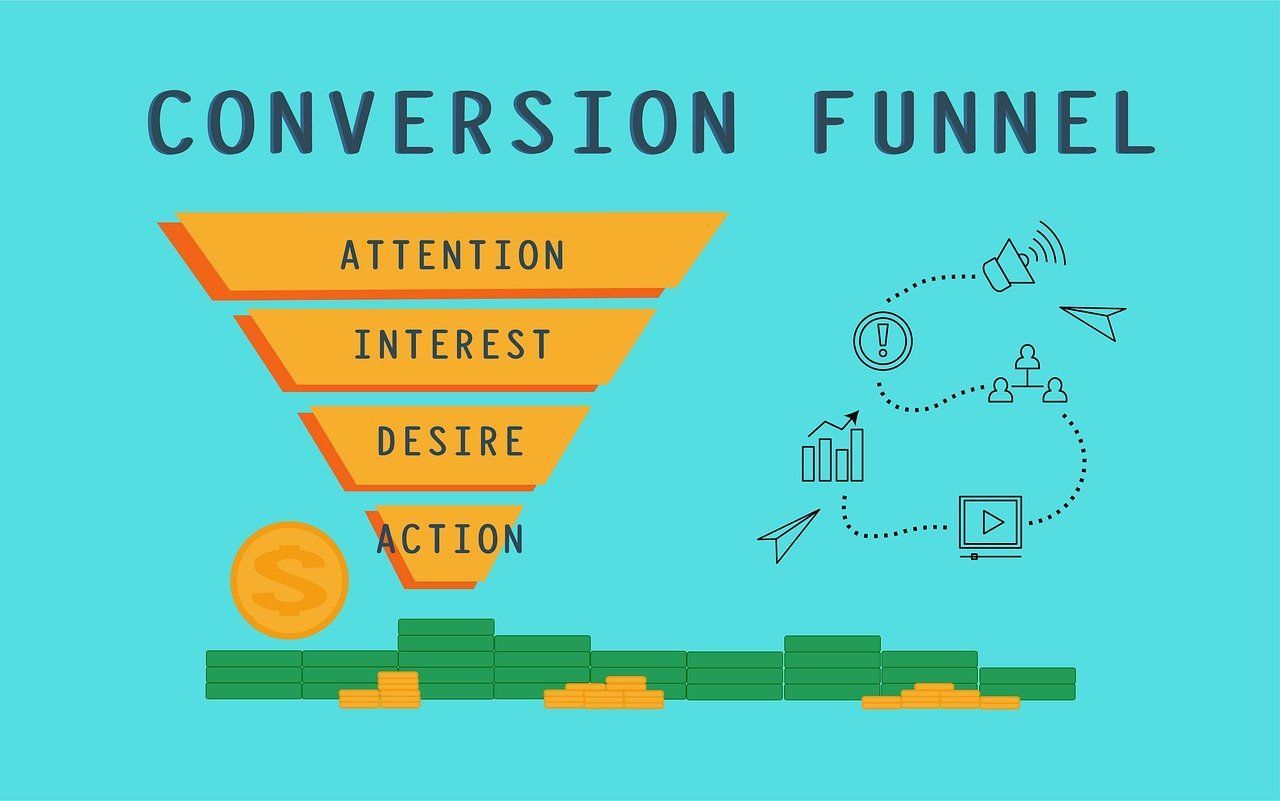
You've defined the mission. You've attracted the right people. Now, you have to close them. This is where most founders fail. They drag the process out for weeks. They ghost candidates. They have 8 rounds of "just-one-more" interviews. Speed is the new currency. A-players have options. The time between their first "hello" and your "offer" is a direct reflection of how much you value them and how decisive your company is. Your hiring process is your product.
Speed is the new currency. A-players have options. The time between their first "hello" and your "offer" is a direct reflection of how much you value them and how decisive your company is. Your hiring process is your product.
My rule is a
3-Interview Loop. Max. It should be a gauntlet, not a marathon.
The 3-Interview Loop
- The Founder Screen (15-20 Mins): This is you. It's a "Vibe , Vision and Behavioral Foundations" check. Is this person smart? Do they get excited about the mission? Do you get excited talking to them? What values are they looking for in a company? It's a high-level filter. If it's a "no," cut them loose respectfully and immediately.
- The "Work Trial" (60 Mins): This is the core assessment. Stop asking brain teasers. Give them a small, practical, real-world sample of the work.
- For an engineer: A small coding problem related to your business logic.
- For a marketer: "Here's our current landing page. Give us a 10-minute teardown of what you'd change."
- For a salesperson: A live role-play of a discovery call.
- Crucially: Notice their mindset in messy moments; are they inquisitive, flexible, and comfortable updating their thinking as new information unfolds?
3. The Team Culture Fit & Reference Call (45 Mins): This is the final check. Have them meet one or two future peers (not a panel!). The
goal is for them to interview you. Does this feel like a team they want to be in the trenches with? Do they elevate the team and does the
team energize them?
Pro-Tip: You, the founder, must check references personally. Don't delegate it. Ask their former manager one simple question: "On a scale of 1-10, what's your "regret" level that [Candidate] left?" If you hear anything less than an 8, dig deeper.
The "Red Carpet" Close
When you're ready to hire, move. You, the founder, must be the one to make the offer. Call them. Don't send an email from HR. This is your "second sales pitch." Re-sell the vision. Tell them why you're so excited to build this with them. Make them feel like they are the one person you've been searching for.
Stop Hiring. Start Recruiting.
A "system" isn't a machine that removes you from the process. It's a flywheel that leverages your founder-led energy.
- Your Mission Brief (Step 1) gives you focus.
- Your Attraction Engine (Step 2) gives you leverage.
- Your High-Speed Process (Step 3) gives you momentum.
This system turns hiring from a painful, reactive cost center into the single most powerful driver of your company's growth. Stop hunting for "talent" and start building a system that recruits A-players to your mission.